A portable power station is a battery, a mains inverter and a set of sockets in one case. You get mains style power away from hook up, and there is nothing to wire into the vehicle.
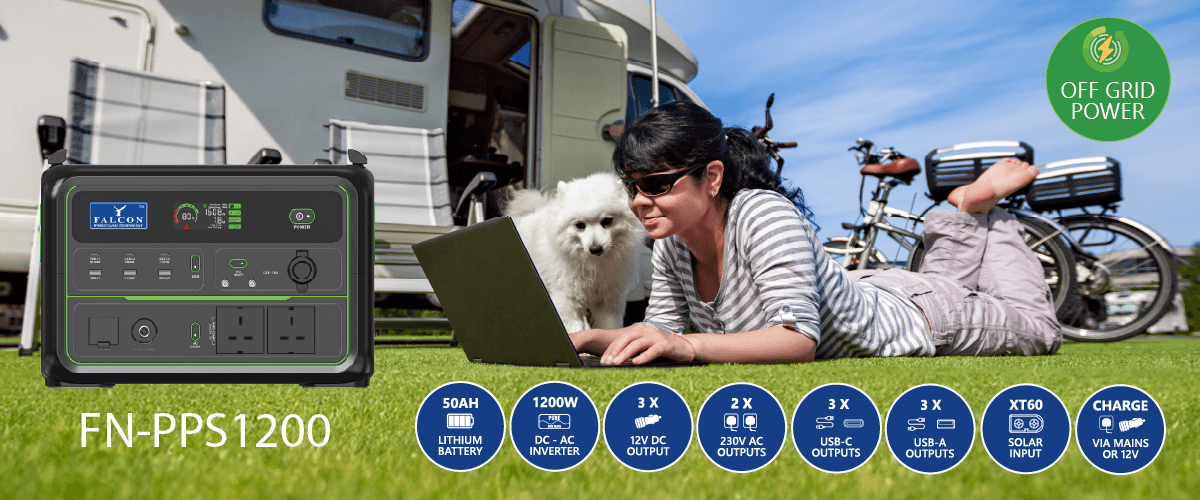
The Falcon 1200W Portable Power Station holds 1120Wh of usable power, runs appliances rated up to 1200W, and recharges from the mains, from your 12V socket while you drive, or from solar. It weighs 12kg, and it needs no installation at all.
What most owners actually want to know is what it will run, how long it lasts on a weekend away, and how the power gets back in. That is what this off grid power guide covers.
We have been supplying power, internet and television for caravans and motorhomes since 1991, so this is the same advice we give on the phone.
Three things that are normally separate live in one box. A lithium battery, an inverter that turns the battery’s DC power into 230V mains, and an MPPT solar regulator for charging from panels. Add the sockets on the front and that is the whole unit.
A traditional off grid setup does the same job with separate parts. A leisure battery under a seat, an inverter wired to it, a charger, and the cabling to join them together. That works well, and for plenty of vans it is the right answer, but it is a fitted installation.
A power station is the plug and play version. It arrives charged, you lift it in, and it works. When you get home it comes indoors and powers the shed, the garden or a few essentials during a power cut.
The inverter is rated at 1200W continuous with 2400W surge, so the rule is simple. Look at the rating plate on the appliance. Under 1200W and it will run. Over 1200W and it will not, no matter how much charge is left.
The output is pure sine wave, which is the same clean waveform you get from a socket at home. That matters for laptop chargers, camera and drone batteries, televisions and e-bike chargers, which can be fussy about the cheaper modified sine wave output.
Things it will run happily, for hours:
Things it will run in short bursts:
Anything that makes heat is expensive to run, and that is where the capacity goes. A domestic 3kW kettle, a 2kW fan heater or a full size air fryer are all rated above the inverter, so they will not run at all. This is worth knowing before you buy rather than after.
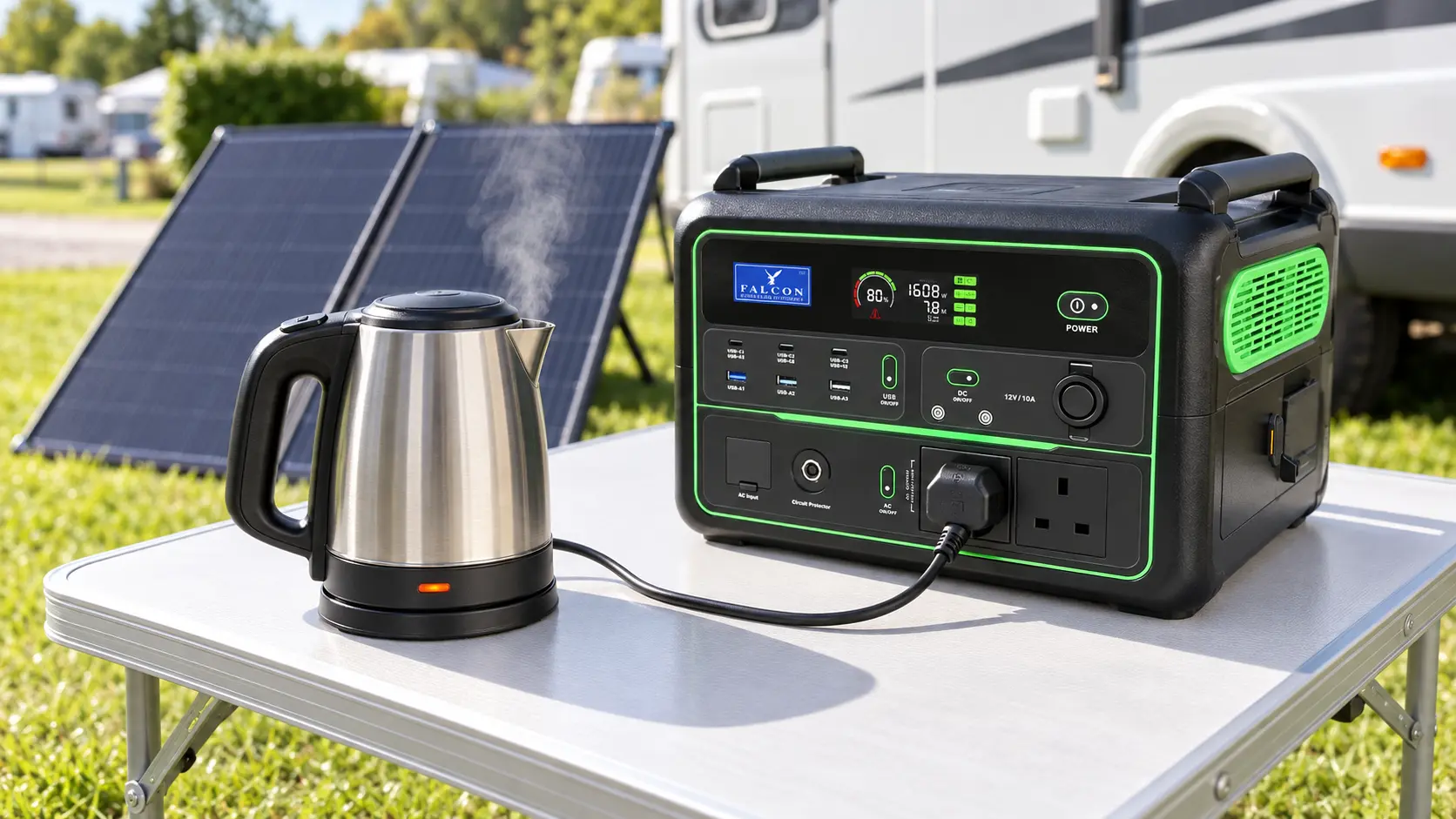
You can work this out yourself, and it is useful to be able to. Take the usable capacity of 1120Wh, divide it by the wattage of what you are running, and take off roughly 10% for the losses in converting battery power to mains.
Treat those as a guide rather than a promise. Real run times move about with the temperature, the age of the battery and how hard the inverter is working. If you want a proper answer for your own kit, add up the wattages of everything you expect to have running at once and do the same sum.
Three ways, and you can use all three on the same trip.
From the mains. The AC input takes up to 800W, so a top up at home before you set off is quick.
From the vehicle, while you drive. The 12V cigarette lighter input charges it on the move, which suits touring where you are changing site every few days.
From solar. The XT60 solar input takes up to 300W at 11 to 50V, and the MPPT regulator is already built in, so there is no separate regulator to buy or wire up. It works with a folding solar panel in either 130W or 270W, or with an existing roof mounted array through the solar charging socket.
Everything on the unit, in one list:
The battery is a 50Ah LiFePO4 pack, which is lithium iron phosphate. It is rated for more than 2000 cycles to 80% of its original capacity. A full charge and discharge every other weekend puts that well into the years rather than the months, which is the main reason this chemistry has taken over from older battery types for leisure use.
One practical note. The unit is designed to be used between 0 and 40°C and stored between -20 and 45°C. Leaving it in a cold locker over the winter is fine. Charging it in there is not, so bring it indoors for that.
Both give you off grid power away from hook up. The difference is whether it is portable or permanent.
A power station suits you if you want no installation, if you like the idea of carrying the power into an awning, a tent or the house, or if you have more than one vehicle. Nothing is wired in, so nothing has to be undone when you change van.
A fitted setup suits you if you want the van’s own sockets and circuits live without plugging anything in, or if you need more capacity than a single portable unit holds. That is a lithium leisure battery with a pure sine inverter and a charger, sized to the vehicle. Our older guide on choosing the right power inverter covers how that sizing works, and we can fit the whole system for you if you would rather not do it yourself.
If you are not sure which camp you are in, start with the power station. It is the only one of the two you can change your mind about.
A power station on its own is a big battery that eventually runs flat. Add a panel and it becomes a system that refills itself.
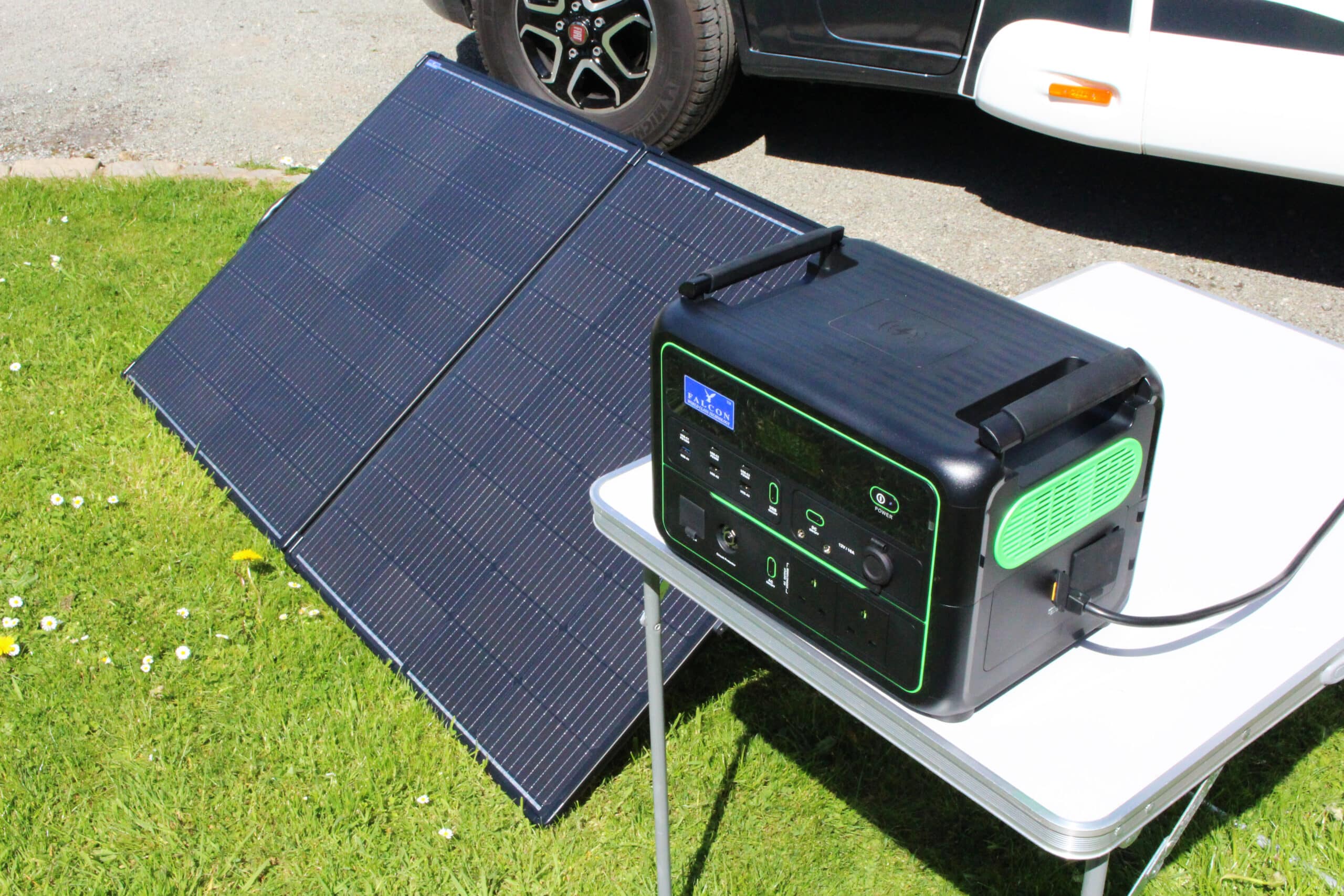
Charge during the day, use it through the evening, repeat. On a reasonable British summer day the 270W folding panel will put a useful amount back in, and it is the largest single panel that fits inside the 300W input limit. The 130W is the one to have if weight and packed size matter more to you than charging speed. You can see the range on the portable solar panels page.
If you need more capacity rather than more charging, the 1120WH battery expansion pack doubles what you have to hand.
What can a 1200W power station run?
Anything rated under 1200W, which covers phones, tablets, laptops, televisions, lights, fans, camera kit and e-bike chargers, plus short spells on a low wattage kettle or hairdryer. Appliances rated above 1200W, such as a domestic kettle or a fan heater, will not run.
How long will it last?
Divide the 1120Wh capacity by the wattage of what you are running and take off about 10%. A 30W television is roughly 30 hours. A 1000W kettle is about an hour of boiling. Low draw devices last a weekend and more without thinking about it.
Can I charge it from solar?
Yes, and the regulator is already inside the unit. The solar input accepts up to 300W through an XT60 connector, so a folding panel plugs straight in, or you can feed it from an existing roof mounted array with the solar charging socket.
Do I need to install anything?
No. There is no wiring, no mounting and no fitting. It is charged when it arrives, so you can use it the same day.
Can I add more capacity?
Yes. The 1120WH expansion pack adds the same capacity again, so you have double the power available without buying a second power station.
Is it suitable for a caravan or motorhome?
Yes, and that is what it was built for. At 12kg it lifts in and out easily, it runs the things people actually use in a van, and it charges from the vehicle’s 12V socket while you drive.
Off grid power does not have to mean rewiring your van. Everything is built into one portable unit, so the Falcon 1200W power station gives you mains style power wherever you park, and it pairs with our folding solar panels for a setup that refills itself. You can see the full range of portable power stations here, and if you would like a hand working out what you need, call us on 0800 622 474 and we will go through it with you.